Port Gridlock: How Chronically Understaffed Southeast Asian Customs Agencies Are Costing US Importers Billions
For American companies that have spent years diversifying their sourcing away from China and into Southeast Asia, the region was supposed to represent operational relief. Lower labor costs, improving infrastructure, and favorable trade agreements made Vietnam, Indonesia, the Philippines, and their neighbors look like the obvious next chapter in global supply chain strategy. What many US importers did not anticipate was that the final mile of that strategy—clearing goods through customs—would become one of the most expensive and least predictable variables in their entire logistics equation.
Across the region, customs agencies are struggling under the weight of surging trade volumes that their budgets, staffing levels, and technology systems were never designed to handle. The consequences are measurable and mounting. Industry estimates now place the annual compliance cost burden on US importers—including delays, penalties, spoilage, buffer inventory, and third-party remediation—at more than two billion dollars per year. That figure is almost certainly conservative.
The Infrastructure Gap That Trade Agreements Don't Fix
When policymakers negotiate preferential trade arrangements, they focus on tariff schedules, rules of origin, and market access commitments. What those agreements rarely address is the operational capacity of the agencies responsible for enforcing them. In several Southeast Asian markets, customs authorities are processing significantly higher cargo volumes with workforces that have grown only marginally over the past decade.
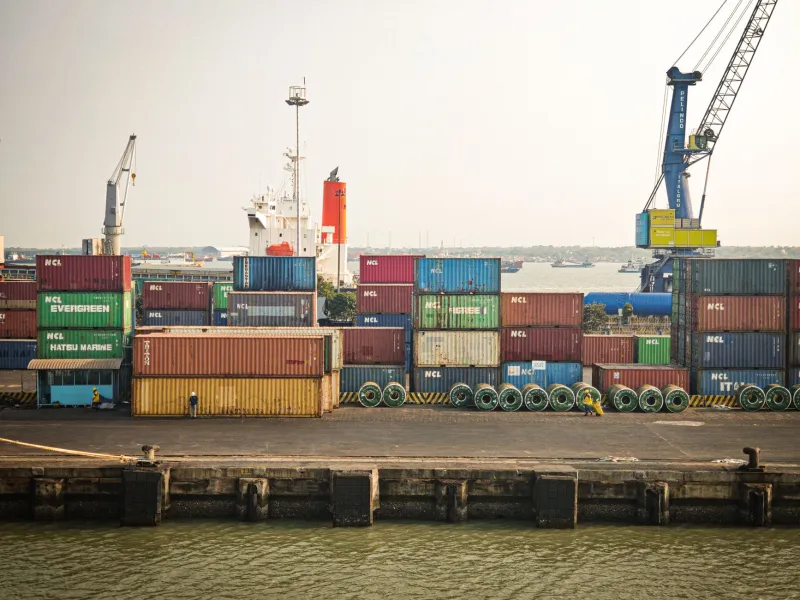
At the Port of Tanjung Priok in Indonesia—the country's largest and one of the busiest in Southeast Asia—chronic officer shortages have contributed to average dwell times that regularly exceed regional benchmarks. Similar patterns have been documented at ports in the Philippines, where staffing gaps in customs examination units have caused routine shipments to sit uninspected for two to three weeks. In Vietnam, rapid export growth has strained the country's customs directorate, with digital integration efforts lagging behind the pace of trade expansion.
These are not isolated anecdotes. They reflect a systemic mismatch between the ambitions embedded in ASEAN trade frameworks and the ground-level capacity to execute them.
What American Importers Are Actually Experiencing
US companies importing finished goods, components, and raw materials from Southeast Asia have developed an informal vocabulary for what happens when customs infrastructure fails them. "Phantom holds"—shipments flagged for inspection that then sit in limbo without clear status updates—are commonplace. So are documentation re-requests, in which customs officers demand resubmission of paperwork that was filed correctly the first time, simply because internal processing systems failed to register the original filing.
For perishable goods, electronics with short product cycles, and just-in-time manufacturing inputs, these delays are not administrative inconveniences. They are financial events. A US apparel brand sourcing from a Vietnamese manufacturer described losing an entire seasonal window after a container of finished garments sat at a Manila transshipment hub for nineteen days due to a classification dispute that took four officers to resolve—none of whom had overlapping jurisdiction. The financial impact ran into seven figures when markdowns and lost retail placement were factored in.
Industrial importers have fared no better. American manufacturers relying on Indonesian component suppliers have reported building two to four weeks of buffer inventory into their domestic warehousing plans specifically to absorb customs unpredictability—an approach that ties up working capital and inflates carrying costs in ways that erode the unit-cost advantages that made Southeast Asian sourcing attractive in the first place.
The Shadow Compliance Economy
Perhaps the most telling indicator of the customs infrastructure crisis is what US importers are doing in response. Across the industry, companies have quietly built what might be called shadow compliance teams—internal or contracted specialists whose sole function is to manage, anticipate, and remediate Southeast Asian customs failures.
These teams monitor shipment status across multiple agency portals, maintain relationships with in-country customs officials, prepare alternative documentation packages in advance of likely re-requests, and coordinate with freight forwarders to preemptively route shipments around known bottlenecks. The cost of maintaining this infrastructure—salaries, retainer fees, technology subscriptions, and travel—runs from several hundred thousand dollars annually for mid-market importers to well into the millions for large enterprises with complex regional sourcing footprints.
This is spending that generates no commercial value. It exists purely to defend against a structural deficit in public customs capacity.
Strategic Responses That Are Actually Working
Not every US importer is simply absorbing these costs. A growing number of companies have adopted more proactive strategies that convert customs complexity from a liability into a relative competitive advantage.
Authorized Economic Operator enrollment is one of the most underutilized tools available to American importers operating in Southeast Asia. Several countries in the region—including Malaysia, Thailand, Vietnam, and Singapore—operate AEO programs that grant pre-vetted importers expedited clearance lanes, reduced examination rates, and priority processing. Enrollment requires an upfront compliance audit and ongoing reporting obligations, but companies that have completed the process consistently report dwell time reductions of thirty to fifty percent compared to standard clearance channels.
Strategic broker partnerships represent another high-leverage investment. The most effective local customs brokers in markets like Indonesia and the Philippines are not simply paperwork processors—they are relationship networks with direct lines to senior customs officials, advance knowledge of enforcement priority shifts, and the credibility to resolve classification disputes before they escalate into formal holds. US companies that treat broker selection as a procurement exercise focused on fee minimization are systematically underinvesting in one of the most valuable risk management assets available to them.
Technology integration at the point of origin is also gaining traction. Several US importers have begun working with their Southeast Asian suppliers to implement digital documentation platforms that generate customs-ready filing packages—including harmonized tariff classifications, certificate of origin documentation, and valuation support—before goods leave the factory floor. When paperwork arrives at the port of export complete and pre-verified, the probability of officer-level re-requests drops substantially.
The Case for Structural Advocacy
Beyond operational workarounds, there is a longer-term argument for US business associations and individual companies to engage directly in advocacy for customs modernization across the region. The US-ASEAN Business Council and bilateral chambers of commerce in markets like Vietnam, Indonesia, and the Philippines have existing channels through which American importers can raise systemic concerns with customs authorities and trade ministries.
Several Southeast Asian governments have expressed genuine interest in World Customs Organization capacity-building programs and bilateral technical assistance arrangements that could accelerate the modernization of their customs systems. US companies that position themselves as constructive partners in that process—rather than simply complainants—are more likely to benefit from early access to pilot programs and preferential treatment as reforms take hold.
Reading the Opportunity Beneath the Friction
The customs infrastructure gap in Southeast Asia is real, expensive, and unlikely to resolve itself quickly. But it is also a market signal. Companies that build genuine expertise in navigating regional customs complexity—through broker relationships, AEO status, documentation technology, and in-country compliance knowledge—are constructing a supply chain capability that competitors without that expertise cannot easily replicate.
In a sourcing landscape where many US importers are drawing from the same Southeast Asian supplier base, the ability to move goods faster, more reliably, and with fewer compliance incidents is a differentiated operational advantage. The companies that treat customs complexity as a solvable problem rather than an unavoidable cost are the ones most likely to extract the full value that Southeast Asian sourcing has always promised.