Diaspora Dollars at Work: How Southeast Asian Immigrant Networks Are Quietly Financing America's Next Wave of Cross-Border Ventures
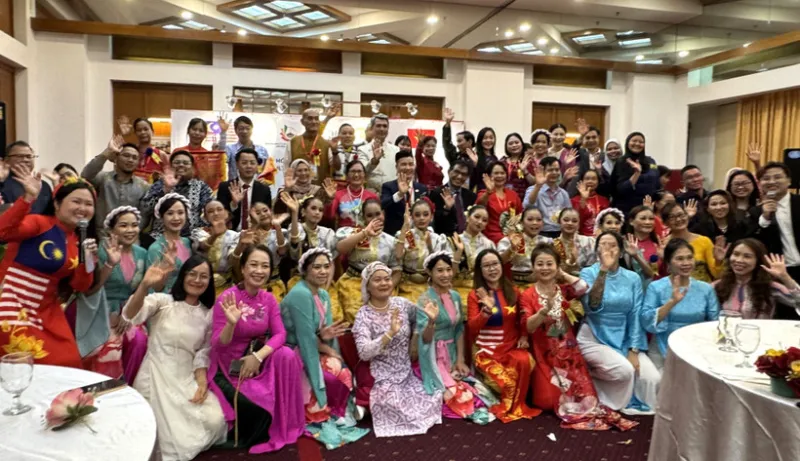
Photo: Southeast Asian immigrant community business meeting money transfer, via file3.qdnd.vn
For decades, the story of Southeast Asian remittances was told through a single, familiar frame: immigrant workers in the United States sending hard-earned wages home to support parents, siblings, and extended families in the Philippines, Vietnam, Indonesia, and beyond. It was a story of sacrifice and solidarity, not commerce. That framing, however, is becoming increasingly incomplete.
A quiet but consequential shift is underway. The same diaspora networks that have long moved money across the Pacific for personal reasons are now being repurposed — sometimes deliberately, sometimes organically — into informal financing channels for small businesses and early-stage ventures operating between the US and Southeast Asia. Regulators are only beginning to take notice. Entrepreneurs who understand the dynamics are already moving.
The Scale of the Flow
To appreciate the significance of this shift, consider the numbers. According to World Bank data, remittance flows to Southeast Asian nations from the United States consistently exceed $150 billion annually when aggregated across the region's major recipient countries. The Philippines alone receives more than $35 billion per year from its overseas workforce, a significant portion of which originates in American cities. Vietnam, Indonesia, and Cambodia follow closely behind.
Historically, the vast majority of these transfers were personal in nature — covering household expenses, school fees, and medical costs. But as Southeast Asian immigrant communities in cities like Los Angeles, Houston, Chicago, and the greater Washington, D.C. metropolitan area have matured economically, the nature of those flows is evolving. Second- and third-generation immigrants with professional incomes and entrepreneurial ambitions are channeling capital back to the region not as charity, but as investment.
Trust as Collateral
At the heart of this emerging system lies something that no bank balance sheet can fully capture: community trust. Across Southeast Asian diaspora communities in the United States, informal lending circles — known by various names depending on cultural origin, such as paluwagan in Filipino communities or arisan in Indonesian ones — have operated for generations as mutual savings and credit mechanisms. Members contribute fixed sums on a rotating basis, with each participant receiving the pooled total at a designated interval.
What is new is the scale and purpose to which these structures are now being applied. Increasingly, diaspora entrepreneurs are leveraging these trust networks not merely to smooth personal cash flow, but to capitalize cross-border business ventures — funding inventory purchases in Manila, financing a small manufacturing run in Ho Chi Minh City, or providing bridge capital to a startup in Jakarta that cannot yet access formal venture funding.
For American entrepreneurs without direct ethnic ties to the region, tapping into these networks requires genuine relationship-building rather than transactional outreach. Several US-based founders interviewed for this piece described spending months attending community events, engaging Filipino-American business associations, or partnering with Vietnamese-American chambers of commerce before any meaningful financial collaboration materialized. The access, when it comes, is real — but it is earned.
A Parallel Economy Taking Shape
The implications extend beyond individual deals. What is effectively emerging is a parallel trade finance ecosystem that operates largely outside the formal banking infrastructure. Traditional small business lenders in the United States have long struggled to underwrite cross-border ventures, particularly those involving counterparties in markets perceived as higher risk. The result has been a persistent financing gap for businesses operating between US cities and Southeast Asian markets.
Diaspora networks fill that gap through mechanisms that formal institutions cannot easily replicate: shared cultural context, personal accountability, and multi-generational reputation stakes. A borrower who defaults on a community lending circle does not merely face financial consequences — they risk social standing within a network that may span from Cebu to California. That social collateral, intangible as it may appear, functions as a remarkably effective enforcement mechanism.
Some financial technology companies have begun studying these dynamics with considerable interest. A handful of fintech platforms operating in the US-Southeast Asia corridor are exploring how to formalize or augment diaspora-linked financing flows without stripping away the trust architecture that makes them function. The challenge, as several founders in this space have noted, is that over-formalizing these networks risks destroying the very attributes that make them valuable.
Regulatory Attention on the Horizon
The informality that gives diaspora finance its flexibility also creates complexity. US financial regulators, including the Financial Crimes Enforcement Network (FinCEN) and the Consumer Financial Protection Bureau (CFPB), have increasingly focused on informal value transfer systems, particularly those that move capital across borders outside licensed money transmission frameworks. Participants in diaspora lending circles are not, in most cases, operating illegally — but the regulatory boundaries are not always clearly understood by those involved.
For American businesses considering engagement with diaspora financing networks, legal counsel familiar with both US money transmission regulations and the relevant laws in the target Southeast Asian market is not optional — it is essential. The opportunity is genuine, but so is the compliance exposure for those who proceed without adequate guidance.
What Forward-Looking US Companies Should Do
For American entrepreneurs and mid-market companies seeking capital-efficient entry into Southeast Asian markets, diaspora networks represent an underutilized resource. The strategic recommendations are straightforward, if not always easy to execute.
First, invest in authentic community engagement. Diaspora business associations in major US metropolitan areas are not merely networking venues — they are the front doors to trust-based capital networks. Presence and participation over time are prerequisites.
Second, seek experienced local partners rather than attempting to navigate these networks as an outsider. A well-connected Filipino-American co-founder or a Vietnamese-American advisor with roots in both communities can unlock access that no amount of formal outreach will achieve independently.
Third, build compliance infrastructure from the outset. Engaging diaspora financing channels without a clear legal framework is a risk that no serious enterprise should accept. The regulatory environment is evolving, and companies that establish clean compliance records early will be better positioned as oversight intensifies.
The diaspora networks connecting Southeast Asia to the United States have always carried more than money. They carry relationships, obligations, and accumulated trust — the very currencies that underwrite commerce in markets where formal institutions have yet to reach. For American companies willing to engage on those terms, the financing infrastructure of the future may already exist, woven quietly into communities across the country.