American Enterprises Are Finding Their Next R&D Breakthrough in Southeast Asia
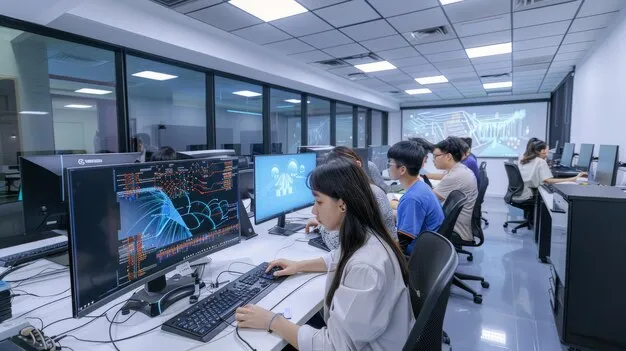
Photo: diverse tech team innovation lab Southeast Asia startup office, via img.freepik.com
The phrase "outsourcing to Asia" once conjured a specific and fairly limited image: American companies dispatching well-defined technical tasks to overseas contractors, retaining creative and strategic control at headquarters, and importing finished work product at a favorable price point. That image has not merely evolved — for a growing cohort of forward-thinking US enterprises, it has become obsolete.
What is replacing it is something considerably more interesting, and considerably more consequential for American businesses and investors paying attention to the region.
The Shift from Vendor to Partner
Across Singapore, Indonesia, Vietnam, and the Philippines, US technology firms, financial services companies, and consumer enterprises are establishing a new kind of presence — one defined not by cost arbitrage alone, but by genuine collaborative research and shared intellectual property development.
The distinction matters. A vendor relationship is transactional: specifications flow outward, deliverables flow back. An innovation partnership is generative: both parties contribute domain expertise, and the resulting intellectual property reflects that joint contribution. For American enterprises, the latter model unlocks access to something that no amount of offshore contracting could provide — the contextual intelligence of teams who understand Southeast Asian consumers, regulatory environments, and market dynamics from the inside.
Microsoft's regional AI research investments, Google's partnerships with local fintech developers, and Salesforce's growing presence in Singapore's startup ecosystem are among the more visible examples of this structural shift. But the trend extends well beyond the household names of Silicon Valley.
Why Southeast Asia Produces Talent That American Companies Need
To understand why US enterprises are increasingly anchoring R&D operations in Southeast Asia, it helps to look at the talent pipeline the region has built over the past fifteen years.
Universities in Singapore, Malaysia, and Vietnam have dramatically expanded their engineering and computer science programs, in many cases with direct input from American technology companies seeking to shape curriculum toward industry-relevant skills. Singapore's National University and Nanyang Technological University both rank among the top 15 engineering schools globally, according to QS World University Rankings — placing them ahead of many well-regarded US institutions.
Beyond formal credentials, the region's developers and data scientists have accumulated practical experience building products for some of the world's most demanding digital markets. Southeast Asia's 680 million consumers have leapfrogged legacy technology infrastructure in ways that forced regional engineers to solve problems — around mobile payment friction, multilingual natural language processing, and low-bandwidth application design — that their counterparts in mature markets rarely encounter. For American companies developing products intended for global deployment, that problem-solving experience is genuinely differentiated.
The compensation differential, while narrowing in talent-competitive cities like Singapore, remains meaningful in markets such as Ho Chi Minh City, Kuala Lumpur, and Manila. A senior machine learning engineer in Vietnam commands roughly one-third the total compensation of an equivalent hire in the San Francisco Bay Area — a gap that makes regional R&D centers financially attractive even before accounting for the intrinsic talent quality.
Where the Collaborative Innovation Is Happening
Several sectors illustrate the depth of US-Southeast Asia co-innovation particularly well.
In financial technology, American payment infrastructure companies have partnered with Singapore and Indonesian startups to develop cross-border payment rails that serve the region's enormous unbanked and underbanked population. The intellectual property generated through these partnerships — including novel identity verification approaches and alternative credit scoring models — is increasingly being adapted for deployment in other emerging markets, including parts of Latin America and Africa, under American enterprise ownership.
In health technology, US medical device and digital health firms have established clinical research and software development operations in Malaysia and the Philippines, where large, linguistically diverse patient populations provide test environments that are difficult to replicate domestically. Regulatory frameworks in these markets, while distinct from FDA standards, have provided useful proving grounds for products that later seek US market approval.
In enterprise software, several American SaaS companies have used Southeast Asian development hubs not merely for maintenance coding but for net-new product feature development. Teams in Hanoi and Manila have shipped product capabilities that are now used by customers globally — a reality that reflects a maturation in how US technology leaders think about distributed innovation.
The IP Question American Investors Should Be Asking
For US investors with exposure to American enterprises operating in Southeast Asia, the intellectual property dimension of this shift deserves careful attention.
The legal frameworks governing IP ownership in collaborative research arrangements vary meaningfully across Southeast Asian jurisdictions. Singapore offers among the most robust IP protections in the region, with enforcement mechanisms that closely parallel those available in the United States. Vietnam and Indonesia have strengthened their IP regimes significantly in recent years, partly in response to US trade pressure and partly as a domestic competitiveness strategy — but gaps in enforcement remain.
Savvy American enterprises are addressing this by structuring their regional innovation partnerships through Singapore-based holding entities, ensuring that IP generated through collaborative work is registered and enforceable under a jurisdiction with strong bilateral legal ties to the United States. For investors evaluating American companies with material Southeast Asian R&D exposure, asking how IP ownership is structured — not merely where development occurs — is an increasingly important element of due diligence.
Building Relationships That Outlast Market Cycles
Perhaps the most underappreciated dimension of the US-Southeast Asia innovation partnership trend is its durability. Unlike manufacturing relationships, which can be relocated relatively quickly in response to cost shifts or geopolitical pressure, deep R&D partnerships generate institutional knowledge, shared codebase dependencies, and interpersonal professional relationships that are genuinely difficult to unwind.
American companies that have invested meaningfully in Southeast Asian innovation partnerships over the past five years report that the relationships have become embedded in their core product development processes — not peripheral experiments that get cut when budgets tighten, but structural capabilities that would be costly and disruptive to remove.
For US enterprises still approaching the region primarily through a cost-reduction lens, that durability argument may be the most persuasive case for reconsidering their strategic posture. The companies building genuine innovation partnerships in Southeast Asia today are not merely saving money on development. They are building competitive advantages — in talent access, market intelligence, and proprietary technology — that will compound over time in ways that transactional vendor relationships simply cannot replicate.
The opportunity, for both American enterprises and the investors who back them, is real and growing. The question is whether US business leaders will recognize it before the window for early-mover advantage closes.