Manila to Jakarta: The Engineering Talent Revolution Reshaping How US Tech Companies Build Their Teams
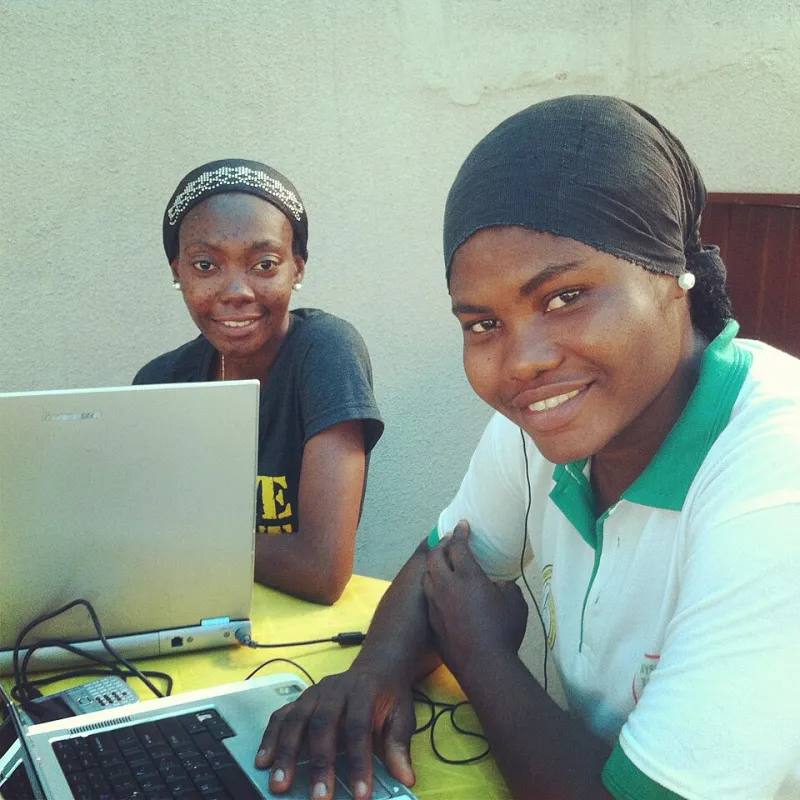
Photo: DFID - UK Department for International Development, CC BY 2.0, via Wikimedia Commons
A Quiet Infrastructure Build-Out Across Two Archipelagos
In the business districts of Manila's Bonifacio Global City and Jakarta's SCBD corridor, a construction of a different kind is underway. American technology companies—ranging from Series B startups to publicly traded software firms—are quietly opening engineering centers, staffing them with locally trained developers, and integrating those teams directly into their core product pipelines. This is not the outsourcing model of the early 2000s. It is something more structurally significant.
The Philippines and Indonesia together represent a combined population of more than 380 million people, with university systems producing hundreds of thousands of STEM graduates annually. Yet for decades, this talent went largely unnoticed by American firms that defaulted to India or Eastern Europe when building offshore engineering capacity. That calculus is changing, and the reasons are both economic and strategic.
The Wage Arbitrage Equation Has Shifted
For US companies navigating a domestic engineering labor market where senior software engineers in San Francisco or New York command salaries north of $180,000 per year, the economics of Southeast Asian talent have become increasingly difficult to ignore. A mid-level full-stack developer in Manila or Jakarta typically earns between $18,000 and $35,000 annually—a fraction of comparable US compensation—without the quality differential that once justified the gap.
This is not simply a story of cheap labor. The more precise framing is one of value recalibration. Philippine and Indonesian engineers increasingly hold degrees from institutions with rigorous computer science curricula, carry experience with modern frameworks and cloud architectures, and are fluent in the same development methodologies—Agile, DevOps, continuous integration—that American product teams rely on. Several US-based venture-backed companies have reported that their Manila engineering pods are indistinguishable in output quality from their domestic counterparts, at roughly 30 to 40 percent of the cost.
English Proficiency as a Structural Advantage
One factor that consistently distinguishes the Philippines from other low-cost engineering destinations is the country's deep integration of English into its educational and professional culture. English is an official language, used as the primary medium of instruction from primary school onward. This produces engineers who communicate with American product managers, participate in code reviews, and contribute to technical documentation without the friction that often hampers distributed teams in other geographies.
Indonesia presents a different but complementary profile. English proficiency among urban professionals in Jakarta and Bandung—where much of the country's tech talent is concentrated—has risen sharply over the past decade, driven by the growth of the domestic startup ecosystem. Companies such as Gojek and Tokopedia have created an engineering culture that is globally oriented, and the developers who come out of that environment are accustomed to working within international product organizations.
Time Zones That Actually Work
One of the persistent criticisms of offshore engineering arrangements is the coordination penalty imposed by large time zone gaps. A team in Bangalore operating on Indian Standard Time sits roughly 10.5 to 13.5 hours ahead of US coasts, making real-time collaboration difficult. Manila (Philippine Standard Time, UTC+8) and Jakarta (Western Indonesia Time, UTC+7) present a more nuanced picture.
For US West Coast companies, the overlap window with Southeast Asia is limited but workable, particularly when teams adopt asynchronous-first workflows. For East Coast firms, the gap is more pronounced. However, a growing number of American companies have addressed this by structuring their Southeast Asian engineering centers around a late-afternoon shift, creating a follow-the-sun model in which code written in the US during business hours is reviewed and extended by Manila or Jakarta teams overnight, compressing development cycles meaningfully.
Several SaaS companies in the US have publicly credited this model with accelerating their release cadences by 20 to 30 percent compared to purely domestic teams.
Success Stories and Structural Patterns
The companies leading this build-out span a wide range of sectors. Fintech firms have been among the earliest movers, drawn in part by the Philippines' own sophisticated digital banking ecosystem, which has produced engineers with direct experience building payment infrastructure and regulatory compliance tooling relevant to US markets. Healthcare technology companies have similarly found value in Manila's large pool of developers with domain knowledge in medical records systems and health data standards.
In Indonesia, the pattern skews toward companies building consumer-facing applications and marketplace platforms. The country's own e-commerce and ride-hailing boom has trained a generation of engineers in high-throughput, mobile-first system design—skills directly transferable to American consumer tech products.
A common structural pattern among successful US entrants is the use of a hybrid model: a small senior leadership presence, sometimes including a US-based engineering director who relocates or travels frequently, combined with a locally hired management layer that handles day-to-day operations. This preserves cultural alignment while avoiding the overhead of a fully expatriate leadership team.
Challenges That Demand Honest Assessment
The opportunity is real, but so are the operational complexities. Attrition rates in Manila and Jakarta's tech sectors have risen as domestic demand for engineering talent has grown. US companies that entered the market expecting the loyalty dynamics of a previous era have found themselves competing for talent with well-funded local startups and regional technology giants that offer competitive salaries alongside the appeal of proximity and cultural familiarity.
Intellectual property protection frameworks in both countries, while improving, require careful legal structuring. American firms establishing engineering centers must work with local counsel to ensure that employment contracts, IP assignment clauses, and data handling practices conform to both US requirements and local law—a process that is manageable but not trivial.
Infrastructure reliability, particularly outside major business districts, remains an intermittent concern. Power stability, internet connectivity, and the availability of co-working or dedicated office space suitable for secure engineering work are factors that require due diligence before committing to a location.
The Strategic Imperative
For American technology companies evaluating their long-term engineering cost structures and talent pipelines, the Philippines and Indonesia represent a compelling and underutilized option. The conditions that made India the default offshore engineering destination two decades ago—English proficiency, technical education, cost advantages—are present in Southeast Asia with the additional benefit of a younger talent ecosystem less saturated by competing demand.
As SuriaLink has observed across its coverage of US-Southeast Asia commercial linkages, the companies that move deliberately and invest in genuine team integration, rather than treating these centers as interchangeable labor pools, consistently report superior outcomes. The engineering talent revolution in Manila and Jakarta is not a temporary arbitrage opportunity. It is a structural realignment in how American technology companies will build their products for the next decade.