Singapore, Malaysia, and Thailand Are Quietly Becoming America's Most Valuable Logistics Allies
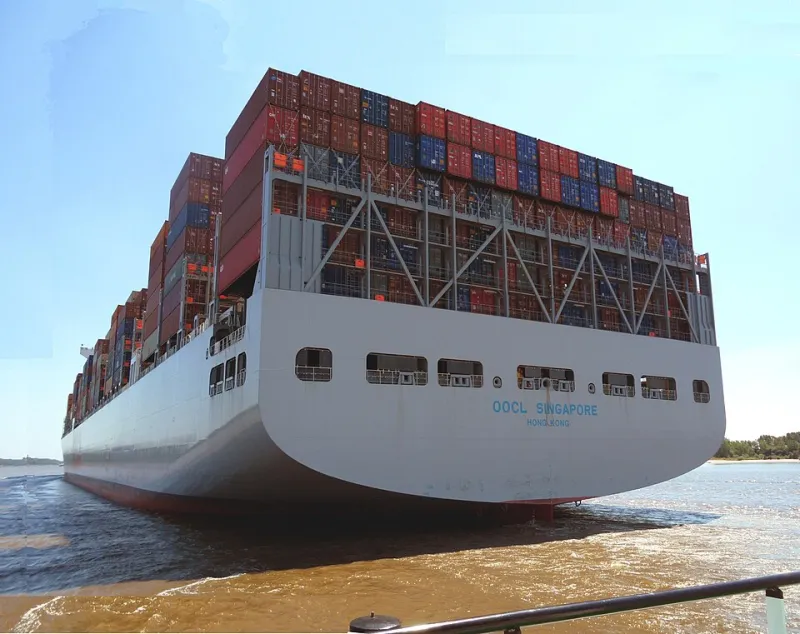
Photo: Buonasera, CC BY-SA 3.0, via Wikimedia Commons
For decades, American retailers treated Asia-Pacific logistics as a binary equation: manufacture in China, ship directly to US ports. That model, once reliable enough, has been strained by pandemic-era bottlenecks, geopolitical friction, and the relentless pressure to reduce lead times. Today, a growing number of US companies are rewriting that equation entirely — and the new variables are Singapore, Malaysia, and Thailand.
These three nations are no longer simply waypoints on a container ship's itinerary. They are becoming sophisticated distribution nerve centers, capable of warehousing, last-mile coordination, and real-time inventory management at a scale that would have seemed implausible a decade ago.
The Cost Case That Is Changing Boardroom Conversations
The financial argument for Southeast Asian logistics hubs is compelling, and it starts with a number that supply chain officers rarely ignore: dwell time. At the Port of Los Angeles, average container dwell times surged past eight days during peak congestion periods in 2021 and 2022. At Singapore's Tanjong Pagar and Port Klang in Malaysia, dwell times consistently remain under three days, even during high-volume periods.
For a mid-sized American retailer moving seasonal inventory — think outdoor furniture in spring or consumer electronics ahead of the holidays — those five-day differentials translate directly into carrying costs, missed sales windows, and expedited freight premiums. Warehousing goods regionally, closer to manufacturing origins, and then dispatching smaller, more frequent shipments to US distribution centers has proven, for many companies, to be meaningfully cheaper than holding inventory stateside.
Beyond dwell times, the labor cost differential in logistics operations remains significant. Warehouse and fulfillment labor in the Johor Bahru corridor of southern Malaysia, for example, runs at a fraction of equivalent costs in Southern California's Inland Empire — a region that has seen industrial lease rates nearly triple since 2019.
Why Singapore Remains the Anchor
No conversation about Southeast Asian logistics is complete without acknowledging Singapore's structural advantages. The city-state's port, managed by PSA International, ranks among the world's busiest transshipment hubs, processing over 37 million twenty-foot equivalent units annually. More importantly for American businesses, Singapore offers something that pure throughput statistics cannot fully capture: regulatory predictability.
US companies operating distribution facilities in Singapore benefit from transparent customs procedures, robust intellectual property protections, and a legal framework that mirrors many Western commercial standards. For businesses managing high-value goods — pharmaceuticals, semiconductors, luxury consumer products — that regulatory environment is not a luxury. It is a prerequisite.
Singapore is also aggressively investing in logistics technology. The nation's Smart Nation initiative has accelerated the deployment of automated port systems, AI-driven cargo tracking, and blockchain-based documentation platforms that dramatically reduce administrative friction for international shippers. American retailers plugging into these systems gain visibility into their supply chains that simply does not exist at many competing ports across the region.
Thailand and Malaysia Fill Critical Gaps
While Singapore anchors the high-end of Southeast Asian logistics, Thailand and Malaysia are carving out essential complementary roles.
Thailand's Eastern Economic Corridor (EEC), a government-designated special economic zone spanning three eastern provinces, has attracted substantial investment in cold-chain logistics and industrial warehousing. American food and beverage companies, as well as agricultural exporters, have taken particular notice. The EEC's infrastructure upgrades — including expansions at Laem Chabang Port, Thailand's primary deep-water facility — have significantly improved the country's ability to handle bulk and temperature-sensitive cargo.
Malaysia, meanwhile, offers a geographic advantage that few logistics analysts overlook: its position astride the Strait of Malacca, through which roughly 40 percent of global trade passes annually. Port Klang and the Port of Tanjung Pelepas have invested heavily in expanding their capacity to serve as transshipment alternatives to Singapore, often at lower handling costs. For American companies whose supply chains span Indonesia, Vietnam, and the Philippines, Malaysia provides an efficient aggregation point before goods continue their journey westward.
Emerging Technologies Raising the Ceiling
The logistics infrastructure story in Southeast Asia is not purely one of ports and warehouses. A new generation of regional technology companies is building the digital layer that makes these physical assets exponentially more useful for American supply chain managers.
Startups across Singapore and Kuala Lumpur are developing freight visibility platforms, dynamic routing algorithms, and customs compliance tools specifically calibrated for the complexity of multi-country Southeast Asian supply chains. Companies such as Ninjavan and aCommerce have demonstrated that last-mile delivery intelligence built in Southeast Asia can be adapted for broader Asia-Pacific applications, including serving US corporate clients managing regional vendor networks.
For American retailers already invested in enterprise resource planning systems, the API integrations now available through Southeast Asian logistics tech providers mean that regional distribution data flows directly into existing dashboards — removing the manual reconciliation that once made multi-hub strategies operationally cumbersome.
What US Companies Should Be Evaluating Now
The strategic window for American businesses to establish or deepen logistics partnerships in Southeast Asia is open, but it is not unlimited. Regional competitors — particularly Japanese, Korean, and Australian firms — have been building these relationships for years. US companies that continue to treat Southeast Asian logistics hubs as contingency options rather than primary strategic assets risk finding themselves at a structural disadvantage as the region's infrastructure matures further.
For supply chain executives beginning this evaluation, three questions are worth prioritizing. First, which product categories in your portfolio are most sensitive to transit time variability, and could those categories benefit from regional buffering? Second, what is the true landed cost comparison between your current trans-Pacific routing and a Southeast Asian hub-and-spoke model? Third, which technology partners in the region align with your existing systems and compliance requirements?
The answers to those questions will look different for a specialty apparel brand than for an industrial equipment distributor. But across categories and company sizes, the directional conclusion is increasingly consistent: Southeast Asia's logistics ecosystem has matured to the point where dismissing it is no longer a conservative choice. It is an expensive one.